
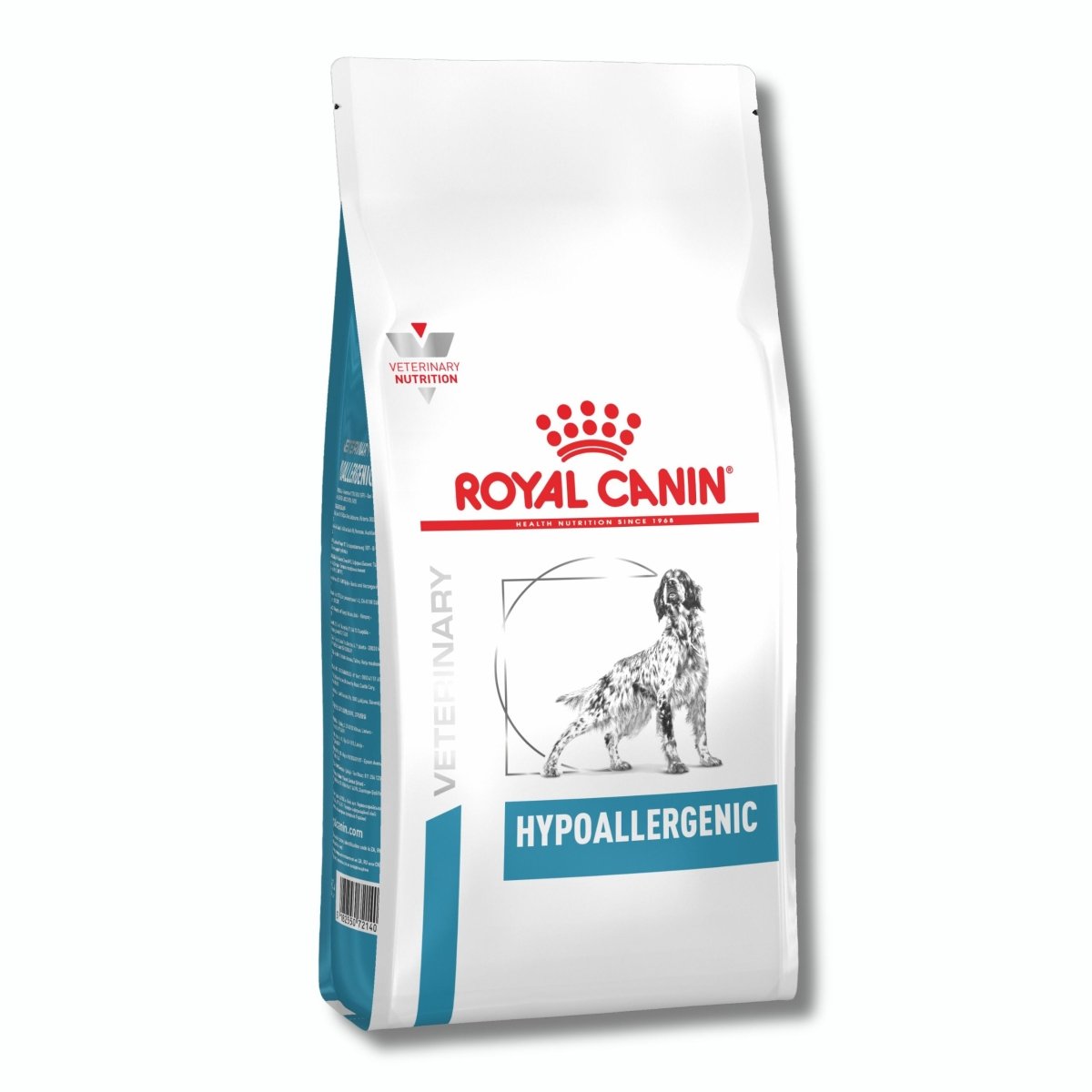
Royal Canin Hypoallergenic Dog Food
Regular price
RRP: $74.99
$55.99
Sale price
$55.99
You Save: $19.00
Unit price perTax included.
Shipping calculated at checkout.
Royal Canin Hypoallergenic Dog Food is a veterinary-exclusive dry diet for adult dogs with food sensitivities and adverse food reactions. Formulated with hydrolysed soy protein, it is designed to reduce the risk of reactions while supporting healthy skin and digestion.
 Fast NZ Shipping
 Secure Checkout
 Kiwi Owned & Operated
Couldn't load pickup availability
Designed for dogs that need a carefully controlled diet, Royal Canin Hypoallergenic uses low molecular weight hydrolysed protein and selected carbohydrate sources to help manage ingredient and nutrient intolerances. It can also be used as part of a veterinarian-guided food elimination trial.
Veterinary Diet Notice: Royal Canin Veterinary diets are designed for specific health needs and should only be used following a current diagnosis and recommendation from a registered veterinarian. Feeding an unsuitable therapeutic diet should be avoided. By purchasing this product, you acknowledge this guidance and the recommendation for veterinary check-ups at least every six months while your pet remains on the diet.
Why Choose Royal Canin Hypoallergenic Dog Food?
Royal Canin Hypoallergenic is a complete veterinary diet formulated specifically for adult dogs with food sensitivities and adverse food reactions. It is designed to provide nutritionally complete daily feeding while reducing exposure to proteins that may trigger an unwanted immune response.
The formula uses hydrolysed soy protein isolate, which is broken down into very small peptides. These smaller protein fragments are less likely to be recognised by the immune system, helping reduce the risk of a food-related reaction. Royal Canin also uses highly digestible carbohydrate sources, including rice, to help support dogs with sensitive digestive systems.
In addition to managing food sensitivities, the diet supports skin and digestive health. EPA and DHA omega-3 fatty acids help maintain healthy skin and coat, while B vitamins and amino acids support the skin’s natural protective barrier. A combination of fibres and prebiotics helps regulate gastrointestinal transit and support a balanced digestive flora.
Royal Canin Hypoallergenic may also be used as part of a food elimination trial when food allergy or intolerance is suspected. A veterinarian’s advice should be sought before use and before extending the feeding period.
Who Is Royal Canin Hypoallergenic For?
This diet may be recommended for adult dogs experiencing signs that could be associated with an adverse food reaction, such as:
- Persistent itching or scratching
- Recurrent skin irritation
- Gastrointestinal upset
- Loose stools or diarrhoea
- Suspected food intolerance
- Dogs undergoing a food elimination trial
These symptoms can have many different causes, so veterinary assessment is important before starting a therapeutic diet.
How Does Hydrolysed Protein Help?
Hydrolysed protein has been broken down into smaller peptide fragments. Because these fragments are smaller than intact proteins, they are less likely to trigger the same immune response in dogs with certain food sensitivities.
Royal Canin Hypoallergenic uses hydrolysed soy protein isolate as its primary protein source, specifically selected for its low molecular weight and digestibility.
Digestive Support
Dogs with food sensitivities may also experience digestive signs such as diarrhoea or inconsistent stools. Royal Canin Hypoallergenic includes a blend of fibres and prebiotics designed to support healthy gastrointestinal transit and balanced digestive flora.
Skin & Coat Support
Food sensitivities can sometimes contribute to itching, redness and skin discomfort. This diet includes omega-3 fatty acids EPA and DHA, together with B vitamins and amino acids, to support healthy skin and help reinforce the skin’s natural protective barrier.
Main Ingredients
Royal Canin New Zealand lists the key ingredients as:
- Rice flour
- Hydrolysed soya protein isolate
- Animal fats
- Rice
- Hydrolysed poultry liver
- Beet pulp
- Minerals
- Soya oil
- Fructo-oligosaccharides
- Fish oil
- Borage oil
- Marigold meal
Protein sources include hydrolysed soya protein isolate and hydrolysed poultry liver, while rice is the primary carbohydrate source.
Hydrolysed Protein For Food Sensitivities
Royal Canin Hypoallergenic is formulated with hydrolysed soy protein made up of low molecular weight peptides. Breaking protein into smaller fragments helps reduce the likelihood of the immune system recognising and reacting to the protein, making the diet suitable for dogs with suspected adverse food reactions.
Supports Food Elimination Trials
This diet can be used as part of a veterinarian-guided food elimination trial when a food allergy or intolerance is suspected. Keeping the diet controlled and avoiding unapproved treats or other foods during the trial is important, because additional protein sources can interfere with the results.
Supports The Skin’s Natural Barrier
Optimal levels of B vitamins and amino acids help reinforce the skin’s natural protective barrier. This is particularly useful for dogs whose food sensitivities are associated with itching, redness or recurring skin irritation.
EPA & DHA For Healthy Skin And Coat
Omega-3 fatty acids EPA and DHA help maintain healthy skin and coat while also supporting digestive health. These fatty acids are an important part of the diet’s wider approach to managing dogs with food sensitivities.
Digestive Health Support
A balanced combination of fibres and prebiotics helps regulate gastrointestinal transit and support a healthy digestive flora. This makes the diet particularly useful for dogs whose food sensitivities are accompanied by digestive upset or diarrhoea.
Complete Daily Nutrition
Royal Canin Hypoallergenic is a complete dietetic food, meaning it is designed to provide the nutrients an adult dog needs when fed as the sole diet. It is not simply a supplement or short-term topper and may be fed long term when recommended by a veterinarian.
Can Be Used Long Term
Nutritional management with Royal Canin Hypoallergenic may be continued for the dog’s lifetime when appropriate. Royal Canin recommends a health check approximately every six months when the diet is being used long term.
Designed For Veterinary Nutritional Management
Royal Canin Hypoallergenic is part of Royal Canin’s Veterinary range and is specifically formulated for dogs with adverse food reactions. Its use of hydrolysed protein, selected carbohydrate sources and targeted skin and digestive nutrients makes it more specialised than a standard sensitive-skin dog food.
How Long Should Royal Canin Hypoallergenic Be Fed?
When a food allergy or intolerance is suspected, Royal Canin recommends using the diet as directed by your veterinarian. It may be used as part of a food elimination trial, and nutritional management may continue long term if your dog responds well.
Do I Need To Transition Slowly?
If a food allergy or intolerance is suspected, Royal Canin states that the diet may be changed without a food transition. In other situations, a standard transition over approximately 5–7 days can be used.
Should I Feed Anything Else During An Elimination Trial?
For a proper food elimination trial, the prescribed diet should generally be fed exclusively unless your veterinarian advises otherwise. Treats, table scraps, flavoured medications and other foods can introduce additional proteins and make it harder to determine whether food is contributing to your dog’s symptoms.
How Many Meals Should I Feed?
Royal Canin recommends dividing the daily allowance into two meals. Feeding smaller, consistent portions can also make it easier to monitor appetite, stool quality and your dog’s response to the diet.
Feeding Amounts
Use the feeding guide printed on the current bag and adjust according to your dog’s target body weight, body condition and veterinary advice.
Your existing guide can remain on the page if it matches the current packaging:
- 5kg target weight: approximately 78–102g per day depending on body condition
- 10kg: approximately 131–172g
- 20kg: approximately 220–290g
- 30kg: approximately 299–393g
- 40kg: approximately 370–487g
Always use your dog’s target healthy weight rather than simply their current weight when following a weight-management feeding column.
Q: What is Royal Canin Hypoallergenic Dog Food used for?
A: Royal Canin Hypoallergenic is a veterinary-exclusive dry diet formulated for adult dogs with food sensitivities and adverse food reactions. It may also be used as part of a food elimination trial when a food allergy or intolerance is suspected. The formula uses hydrolysed protein and selected carbohydrate sources to reduce the likelihood of an unwanted reaction while still providing complete daily nutrition.
Q: What makes Royal Canin Hypoallergenic different from normal sensitive dog food?
A: The main difference is the use of hydrolysed protein. Instead of using intact proteins, Royal Canin breaks soy protein down into low molecular weight peptides that are less likely to trigger an immune response in susceptible dogs. It is also a veterinary diet specifically formulated for adverse food reactions rather than a general “sensitive stomach” food.
Q: What protein is used in Royal Canin Hypoallergenic?
A: The primary protein source is hydrolysed soya protein isolate, with hydrolysed poultry liver also included in the formulation. Hydrolysis breaks proteins into smaller peptides to reduce the risk of triggering an adverse food reaction.
Q: Is Royal Canin Hypoallergenic suitable for a food elimination trial?
A: Yes. Royal Canin New Zealand specifically states that the diet can be used as part of a food elimination trial. For the trial to be meaningful, it is important to follow your veterinarian’s instructions and avoid feeding other foods or treats that could introduce additional protein sources.
Q: How long does a food elimination trial usually take?
A: Your veterinarian will determine the appropriate trial period based on your dog’s symptoms and history. Royal Canin positions Hypoallergenic as suitable for nutritional management of food sensitivities and states that it may be continued long term if appropriate. Consistency is important, because feeding other foods during the trial may make the results difficult to interpret.
Q: Can Royal Canin Hypoallergenic help itchy skin?
A: It may help when the itching is related to an adverse food reaction. The diet is formulated with hydrolysed protein to reduce food-related reactions and includes EPA, DHA, B vitamins and amino acids to support healthy skin and the skin’s natural protective barrier. However, itching can have many causes, so persistent skin problems should be assessed by a veterinarian.
Q: Can it help dogs with diarrhoea or digestive upset?
A: Yes, when digestive signs are associated with food sensitivity. Royal Canin Hypoallergenic contains a balance of fibres and prebiotics designed to support healthy gastrointestinal transit and balanced digestive flora, including in dogs prone to diarrhoea. Persistent or severe digestive symptoms should still be investigated by a veterinarian.
Q: Can my dog eat treats while on Royal Canin Hypoallergenic?
A: If your dog is completing a food elimination trial, treats and other foods should generally be avoided unless specifically approved by your veterinarian. Even small amounts of another protein source can interfere with the trial and make it difficult to determine whether your dog is responding to the diet.
Q: Do I need to transition my dog onto Royal Canin Hypoallergenic?
A: If food allergy or intolerance is suspected, Royal Canin states that the diet may be changed without a transition. Otherwise, a gradual change over approximately 5–7 days can be used to help your dog adjust to the new food. Follow your veterinarian’s recommendation for your individual dog.
Q: Can Royal Canin Hypoallergenic be fed long term?
A: Yes. Royal Canin states that nutritional management with Hypoallergenic may be continued for the dog’s lifetime when appropriate. For dogs remaining on the diet long term, Royal Canin recommends a health check approximately every six months.
Q: Is Royal Canin Hypoallergenic nutritionally complete?
A: Yes. It is a complete dietetic feed for adult dogs, so it is designed to provide complete daily nutrition when fed according to the recommended feeding amounts. It does not need to be combined with another complete food.
Q: Is Royal Canin Hypoallergenic the same as Royal Canin Anallergenic?
A: No. Both are veterinary diets used for food sensitivities, but they are different formulations. Hypoallergenic uses hydrolysed soy protein and may be suitable for many dogs with adverse food reactions, while Anallergenic is generally used where an even more extensively hydrolysed or tightly controlled protein source is required. Your veterinarian can advise which diet is more appropriate for your dog.
Q: Is this food suitable for puppies?
A: Royal Canin New Zealand positions this standard Hypoallergenic dry formula for adult dogs. Puppies have different nutritional requirements for growth, so a veterinarian should recommend an appropriate diet if a puppy is suspected of having a food sensitivity.
Q: Do I need a veterinary recommendation to feed Royal Canin Hypoallergenic?
A: Royal Canin classifies Hypoallergenic as a veterinary-exclusive formula and recommends seeking a veterinarian’s opinion before use and before extending the period of use. This is particularly important because symptoms such as itching, recurrent ear problems or digestive upset can have causes unrelated to food.
Q: How often should my dog be checked while eating this diet long term?
A: Royal Canin recommends a health check approximately every six months for dogs managed long term on Hypoallergenic. This gives your veterinarian an opportunity to review your dog’s weight, skin condition, digestive health and whether the diet remains appropriate.