
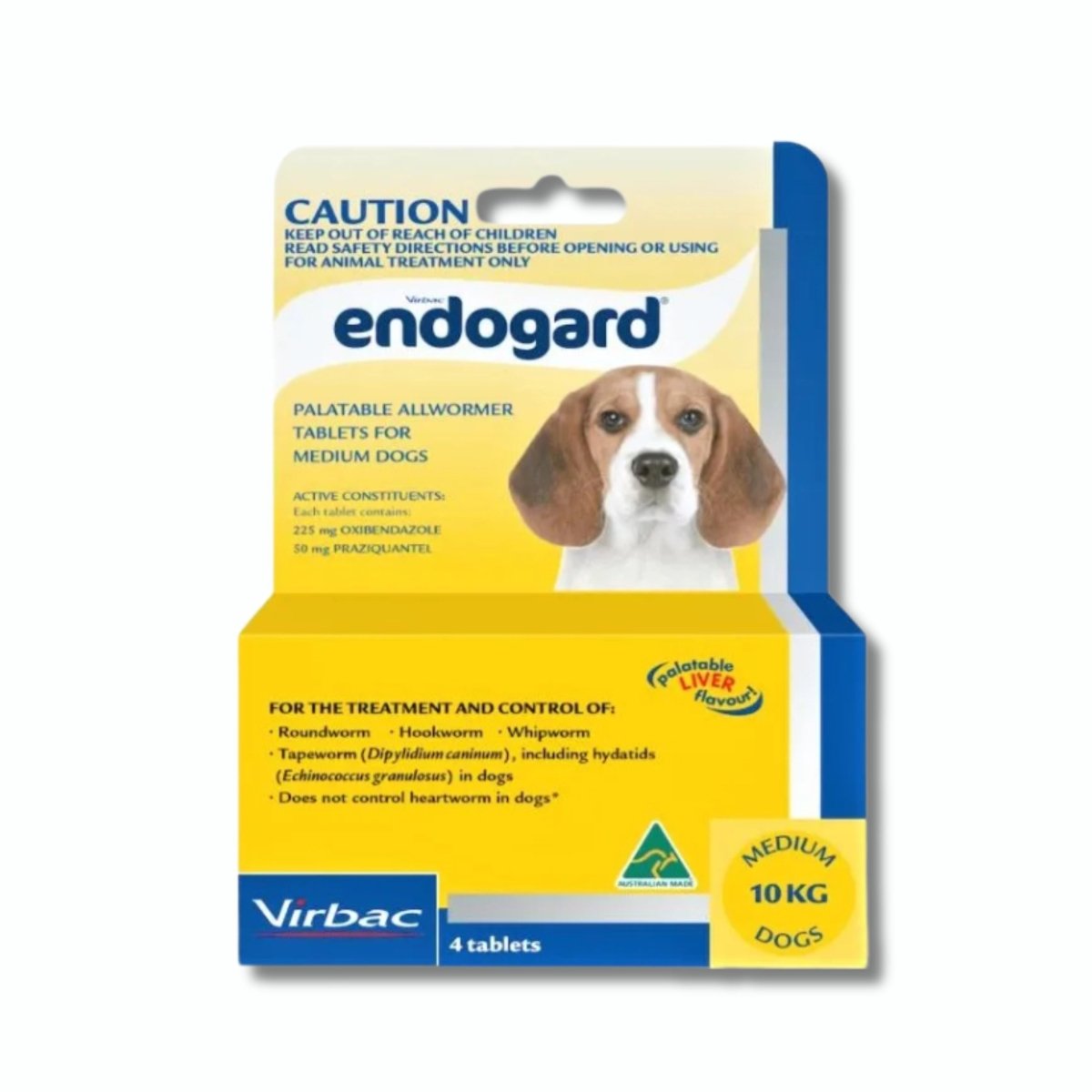
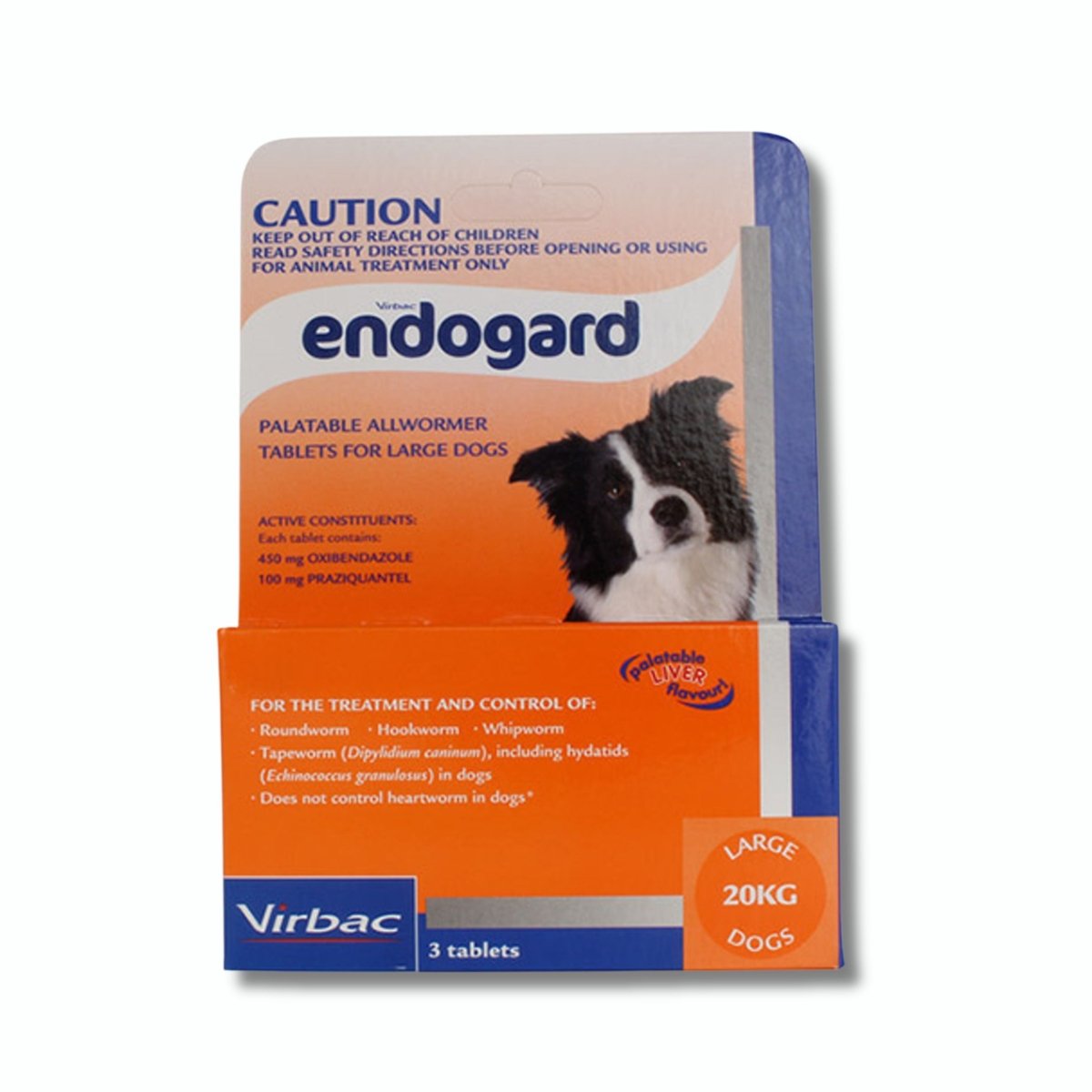
Endogard for Dogs
Regular price
RRP: $29.99
$24.99
Sale price
$24.99
You Save: $5.00
Unit price perTax included.
Shipping calculated at checkout.
Endogard for Dogs is a broad-spectrum intestinal wormer that treats roundworm, hookworm, whipworm and tapeworm in medium and large dogs. Available in easy-to-administer liver-flavoured tablets, it provides reliable routine worm control for growing and adult dogs.
 Fast NZ Shipping
 Secure Checkout
 Kiwi Owned & Operated
Couldn't load pickup availability
Routine worming made simple. Endogard for Dogs provides effective treatment for four common intestinal worms in a palatable liver-flavoured tablet. This page includes the Medium and Large formulations and is available over the counter in New Zealand with no prescription required. Own a smaller dog or cat? Browse Endogard for smaller dogs and cats.
Why Choose Endogard for Dogs?
Regular worming is one of the simplest and most important ways to protect your dog's health. Intestinal worms are common throughout New Zealand, and many infected dogs show few or no obvious signs until worm burdens become significant. Routine treatment helps remove these parasites before they affect your dog's health or contaminate the environment.
Endogard for Dogs is a broad-spectrum intestinal wormer formulated to treat four of the most common intestinal worms affecting dogs—roundworm, hookworm, whipworm and tapeworm. The liver-flavoured tablets are easy to administer and can be given directly or with food, making routine worming straightforward for both dogs and owners.
This page includes the Medium and Large Endogard formulations, allowing you to choose the appropriate strength based on your dog's body weight.
If your dog also requires flea protection, browse our complete range of Dog Flea & Worm Treatments to compare combination parasite products.
What Worms Does Endogard Treat?
Roundworm
Roundworms are among the most common intestinal parasites found in dogs, particularly puppies. They can affect growth, digestion and general health if left untreated.
Hookworm
Hookworms attach to the intestinal lining and feed on blood. Heavy infestations may contribute to anaemia, poor condition and digestive upset.
Whipworm
Whipworms live within the large intestine where they may cause diarrhoea, weight loss and chronic bowel irritation.
Tapeworm
Endogard treats common canine tapeworm species, including hydatid tapeworm, helping remove existing infections and reduce ongoing parasite burdens.
What Endogard Does Not Treat
Endogard is an intestinal wormer only and does not protect against:
Fleas
Ticks
Ear mites
Mange mites
Heartworm
Lungworm
If your dog requires protection against these parasites, an additional parasite treatment may also be recommended.
Why Routine Worming Matters
Dogs become infected with intestinal worms in many different ways, including contaminated soil, infected faeces, hunting, raw meat and swallowing infected fleas. Because many infections produce few visible symptoms, routine worming is recommended even for healthy-looking dogs.
Adult dogs are generally wormed every three months, while puppies require more frequent treatment during their early growth.
How To Give Endogard
Endogard tablets are easy to administer and may be:
- Given directly by hand.
- Hidden inside food or treats.
- Crushed and mixed with food if required.
No fasting is required before treatment.
Always choose the correct tablet strength according to your dog's body weight and follow the manufacturer's dosing instructions.
Active Ingredients
Praziquantel
Praziquantel treats tapeworm infections by damaging the parasite's outer surface, allowing it to be naturally eliminated.
Pyrantel Embonate
Pyrantel targets roundworm and hookworm by paralysing the worms so they can be passed safely through the digestive tract.
Oxantel Embonate
Oxantel provides activity against whipworms, giving Endogard broad-spectrum intestinal worm coverage.
Broad-Spectrum Intestinal Worm Treatment
Endogard treats four of the most common intestinal worms affecting dogs, providing comprehensive worm control in one convenient tablet.
Medium & Large Dog Formulations
This page includes the Medium and Large Endogard tablets, allowing accurate dosing for medium and large breed dogs. Always choose the correct strength based on your dog's current weight.
Safe During Pregnancy And Lactation
Endogard is suitable for use in pregnant and lactating dogs according to the product directions, making routine worm control easier throughout breeding.
Easy Liver-Flavoured Tablets
The palatable liver-flavoured tablets make routine worming easier for both dogs and owners and can be administered directly or with food.
Flexible Weight-Based Dosing
Available in different tablet strengths, Endogard allows accurate dosing across dogs ranging from young puppies to giant breeds.
Ideal For Routine Worming
Regular treatment every three months helps remove common intestinal worms before they become established and supports your dog's ongoing digestive health.
Trusted Veterinary Formula
Endogard combines three proven active ingredients that have been used for many years in veterinary parasite control to provide reliable broad-spectrum worm treatment.
Easy To Combine With Flea Treatments
Because Endogard focuses on intestinal worms, it can be used alongside many flea treatments to create a complete parasite prevention programme.
Q: What worms does Endogard treat?
A: Endogard treats roundworm, hookworm, whipworm and tapeworm, including hydatid tapeworm, providing broad-spectrum intestinal worm treatment for dogs.
Q: Does Endogard prevent worms?
A: No. Endogard treats existing intestinal worm infections but does not provide ongoing protection after treatment. Dogs can become reinfected, which is why regular worming is recommended.
Q: How often should I worm my dog?
A: Adult dogs are generally wormed every three months. Puppies require a more frequent treatment schedule during their first months of life. Always follow the product directions or your veterinarian's advice.
Q: Which Endogard size should I choose?
A: This page stocks the Medium and Large Endogard formulations. Select the appropriate tablet strength according to your dog's current body weight and follow the dosing guide supplied with the product.
Q: Can puppies use Endogard?
A: Yes. Endogard is suitable for puppies from 2 weeks of age when dosed correctly according to their body weight.
Q: Can pregnant or nursing dogs use Endogard?
A: Yes. Endogard is suitable for use during pregnancy and lactation when used according to the manufacturer's directions.
Q: Does Endogard treat fleas?
A: No. Endogard is an intestinal wormer only and does not provide flea control. If your dog requires flea protection, a separate flea treatment should also be used.
Q: Does Endogard treat heartworm?
A: No. Endogard does not prevent or treat heartworm. Dogs requiring heartworm prevention will need a separate heartworm product where appropriate.
Q: Can Endogard be given with flea treatments?
A: Yes. Endogard is commonly used alongside flea treatments because it focuses solely on intestinal worms. Always check the active ingredients before combining parasite products or seek veterinary advice if you are unsure.
Q: Do I need a prescription to buy Endogard in New Zealand?
A: No. Endogard for Dogs is available over the counter throughout New Zealand and does not require a veterinary prescription. Simply choose the correct formulation for your dog's weight and follow the manufacturer's dosing instructions.
Q: What is the difference between Endogard and Milpro?
A: Both Endogard and Milpro are broad-spectrum intestinal wormers that treat the major intestinal worms affecting dogs. They contain different active ingredients and have slightly different parasite coverage, so the best choice depends on your dog's individual parasite control needs.
Q: My dog looks healthy. Do they still need regular worming?
A: Yes. Many dogs infected with intestinal worms show no obvious symptoms. Routine worming helps remove parasites before they affect your dog's health and reduces contamination of your home and environment.
Q: Can Endogard be given with food?
A: Yes. Endogard may be given directly by hand or mixed with food if preferred. Most dogs readily accept the liver-flavoured tablets.